
D250 to D300 Factory Power Upgrade Brisbane
Here is a secret hiding on your own driveway: if your Land Rover wears a D250 badge, the engine underneath is mechanically identical to the D300 in the next lane. Same block, same turbos, same internals, built on the same line. The only difference between 183 kilowatts and 221 kilowatts is the calibration file the factory loaded before shipping. Yours got the smaller number.
If you have been searching for a D250 to D300 upgrade in Brisbane, this page gives you the complete picture: exactly what changes, the real before and after figures, which models qualify, what it costs, and honest answers on warranty and detectability. By the bottom, you will know whether your vehicle is one calibration away from the engine it was built to be.
At our Capalaba workshop, the upgrade is the factory’s own D300 configuration loaded by a factory-trained JLR master technician. $950, done in hours while you wait, backed by our 12-month workmanship guarantee.
Same Engine, Two Badges: How This Is Possible
The Ingenium 3.0-litre inline-six diesel with mild hybrid assistance is one engine that JLR sells at several output levels. Rather than engineering separate engines, the factory builds one and sets its output in software: D250 for one price point on the options list, D300 for another. Your engine already contains every component the D300 relies on, engineered and validated to carry the higher output for the life of the vehicle.
That is why this page is short on mechanical drama. Nothing is bolted on, nothing is machined, nothing aftermarket enters your engine bay. We load the factory’s own D300 calibration onto your vehicle, the same configuration running in thousands of D300s across Australia right now. Your engine simply stops being paid less than it is worth. It is the flagship example of how our whole retrofits and activations division works: your vehicle already owns more than it shows you.
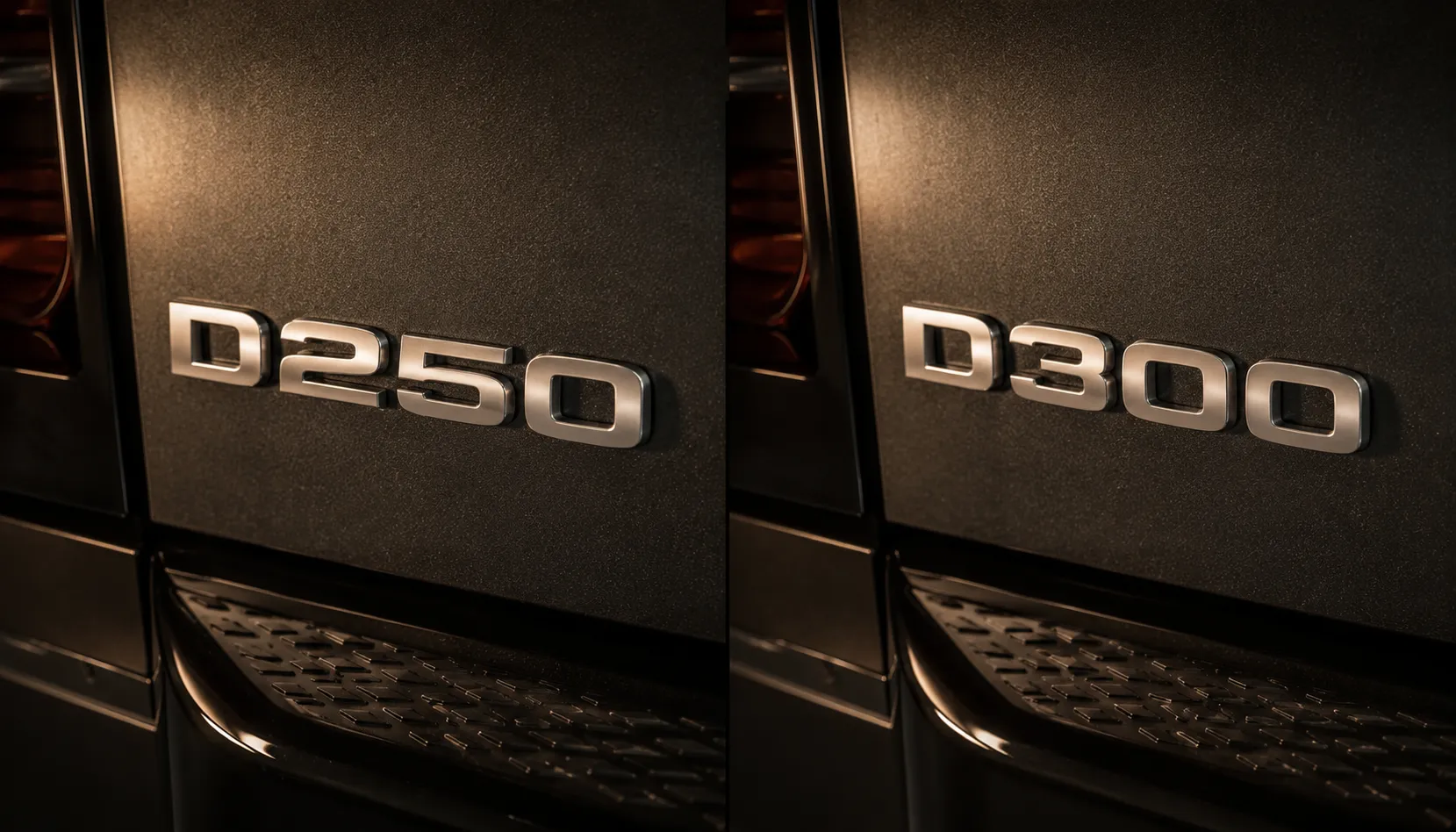
One engine, several badges. The difference ships in software.
What You Gain: The Before and After
The factory publishes both sets of figures, so this is the rare upgrade where the outcome is not a promise. It is a specification.
| Power | Torque | |
|---|---|---|
| Your D250 today | 183 kW (249 PS) | 570 Nm |
| After the upgrade (D300) | 221 kW (300 PS) | 650 Nm |
| The difference | +38 kW | +80 Nm |
On the road, the change lives in the middle of the rev range where Australian driving actually happens. Overtaking on the Bruce Highway stops being a calculation. The vehicle holds its pace up the Toowoomba range with a boat behind it instead of hunting gears. Nothing about the character changes, because this is the character JLR designed; there is simply more of it, exactly where the D300 has always had it. Every upgrade includes our 12-month workmanship guarantee.
Which Models Carry the D250
The D250 appears across the modern Land Rover range wherever the Ingenium 3.0 diesel is offered. The common Australian builds:
| Model | Typical years with the D250 |
|---|---|
| Defender 90 & 110 (L663) | 2020 onwards |
| Discovery (L462) | 2021 onwards |
| Range Rover Sport (L494 & L461) | 2021 onwards |
| Range Rover & Velar builds with the Ingenium 3.0 diesel | Confirmed by VIN |
Model lists are a guide; your VIN is the answer. It tells us in seconds whether your exact build carries the Ingenium 3.0 D250 and qualifies for the factory D300 calibration, and the check is free. If your engine is the D300 already, the next step up is our D300 to D350 upgrade, and petrol owners have their own path on the petrol power upgrades page.
This Is Factory Calibration, Not a Tune
The distinction matters enough to earn its own section. An aftermarket tune is a third party’s guess at how hard your engine can be pushed: custom maps, altered safety margins, and an engine now running a configuration its maker never validated. A factory power upgrade is the opposite. Your engine runs a parameter set JLR itself engineered, tested and ships in production vehicles, inside every engineering margin the factory set.
That is also why we draw hard boundaries. We do not touch SVR models or supercharged V8 engines, we do not work on previously modified vehicles, and we will not load anything that does not exist as a factory-approved configuration for your engine. If your vehicle does not have a factory step above it, we will tell you plainly at the VIN check rather than sell you something we would not put our name on. Deeper detail on how the whole category works lives on our factory power upgrades page.
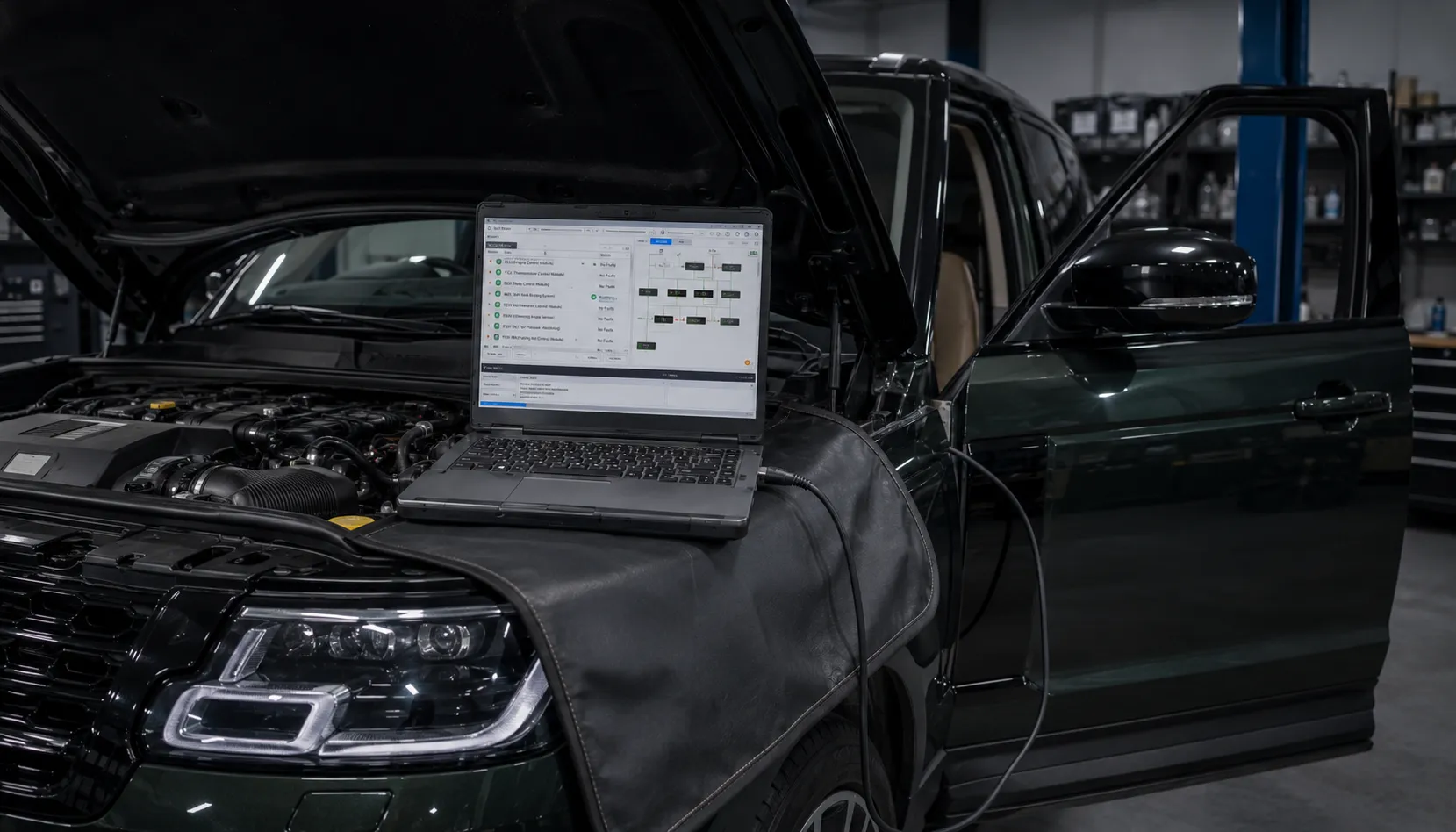
The calibration your engine runs after the upgrade is JLR’s own.
Your Five-Point Checklist Before You Book
1. Find your VIN. Base of the windscreen on the driver’s side, or your registration papers. It confirms your engine variant and eligibility in seconds.
2. Check your badge. A D250 badge on the tailgate is a strong hint, but badges get deleted and vehicles get rebadged, so the VIN remains the truth.
3. Confirm your vehicle is unmodified. Factory baselines only. An existing aftermarket tune changes the answer, so tell us upfront and we will advise honestly.
4. Think about timing. The upgrade takes hours, not days, done while you wait, and a pre-booked courtesy car is available by advance reservation, subject to availability. Typical booking lead time is within two weeks.
5. Bundle the visit. The same VIN check reveals every dormant feature your build carries, from software activations to camera systems, so one booking can cover more than power.
Why Owners Trust SemCar With Their Engines
Engine calibration is the deepest software work a vehicle can receive, and it should never be a leap of faith. Every upgrade here is performed by a factory-trained Jaguar Land Rover master technician using dealership-level diagnostic equipment at our dedicated JLR workshop in Capalaba. Australia’s Motor Vehicle Information Scheme gives specialist independent workshops access to manufacturer service information, and we use that access on every calibration, every time.
Owners also tell us the honesty is the reason they book: fixed price before we start, hard boundaries on what we will not do, and straight answers on the questions below that most of this industry prefers to dodge.
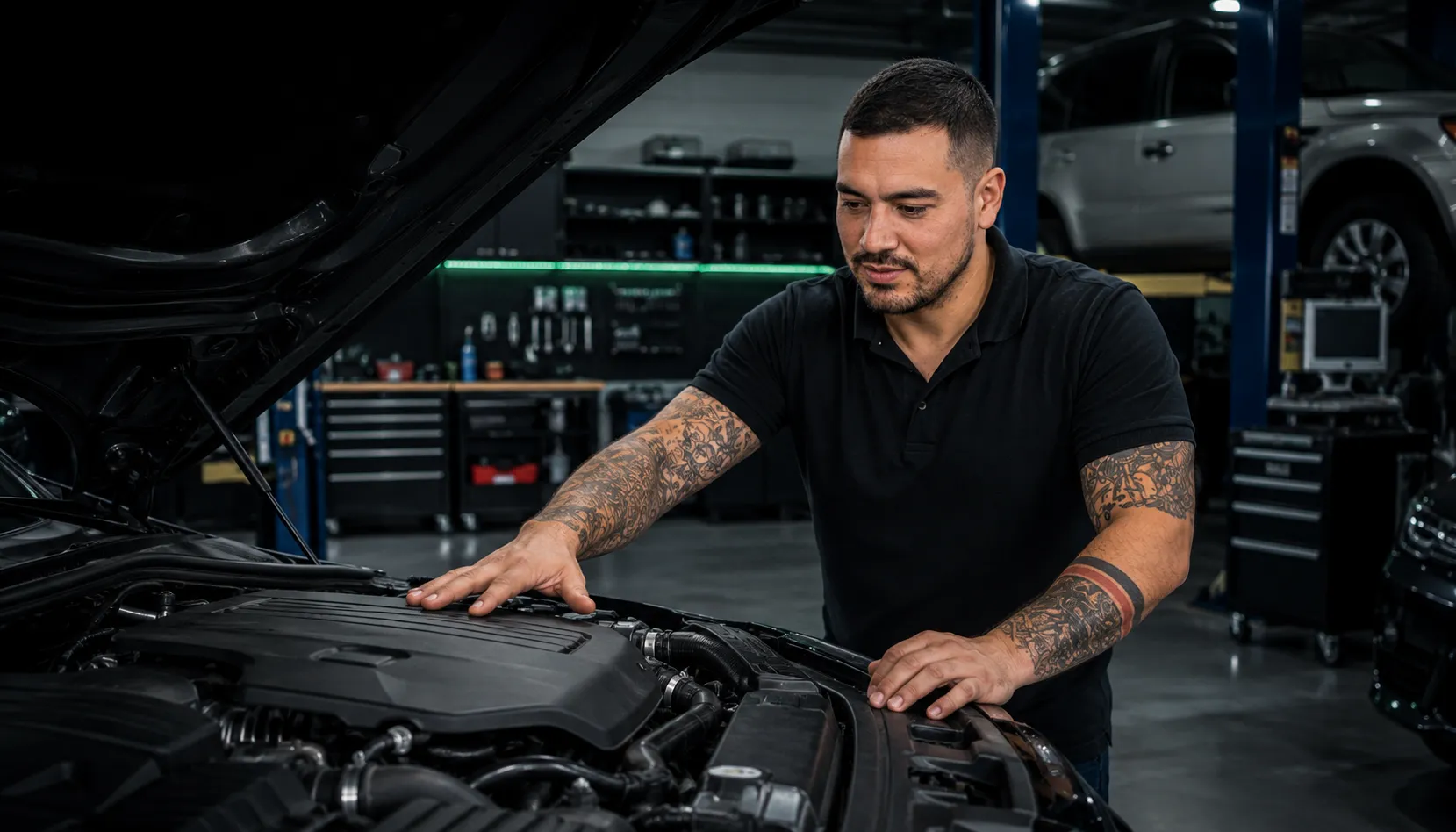
Factory-trained. Dealership-level equipment. The factory’s own file.
Questions You Must Ask Before Booking
Will the D250 to D300 upgrade void my new-car warranty?
Under Australian Consumer Law, a manufacturer cannot void your entire warranty simply because a third party has worked on your vehicle; what matters is whether the work caused a fault. Our upgrade loads a factory configuration to factory procedure, and every job carries our own 12-month workmanship guarantee. What we will not do is pretend a dealer relationship is unaffected by any modification anywhere; read the next answer for the honest version.
Can a dealer tell the upgrade has been done?
Yes. A dealer with the right equipment can identify that your calibration differs from your VIN’s delivery specification. What they find is JLR’s own D300 configuration rather than a third-party map. Anyone in this industry who promises invisibility is telling you what you want to hear, and that is not how we operate.
Will a software update remove the upgrade?
It can. A major over-the-air or dealership update occasionally returns the vehicle to its delivery calibration. When that happens, bring it back and we re-apply the configuration. Rare, known, and we would rather you hear it from us before you book than discover it later.
Is it safe for the engine?
The D300 calibration was engineered by JLR for this exact engine and runs in thousands of production vehicles. Your internals, cooling and drivetrain are the same components the factory validated at the higher output. That is the entire reason we only offer factory steps and refuse aftermarket maps.
Will it change my fuel economy?
Driven the same way, consumption stays close to what you know, because the calibration spends its extra capability only when you ask for it. Use the new overtaking punch often and you will use more fuel while doing so. We will not promise the impossible combination of more power and less diesel.
Does my towing capacity increase?
No. Towing capacity is a compliance rating set when the vehicle was certified, and no software changes it. What changes is how the vehicle feels inside that rating: holding speed on grades with a load behind you is where owners notice the upgrade most.
How long does it take?
Hours, not days, done while you wait, with a pre-booked courtesy car available by advance reservation, subject to availability. Typical booking lead time is within two weeks.
Is there anything you will not do?
Yes. No SVR models, no supercharged V8 engines, no previously modified vehicles, and nothing that does not exist as a factory-approved configuration for your engine. If the honest answer is that your vehicle has no factory step, you will hear it plainly at the free VIN check.
How It Works: VIN to Driveway in Four Steps
1. Free VIN check. Send your VIN through the form below. We confirm your engine variant and that the factory D300 step applies to your build.
2. Fixed quote. $950, stated before anything happens. No deposit, no surprises.
3. Book in. The calibration is loaded in hours while you wait, or take the pre-booked courtesy car.
4. Drive out. With the outputs your engine was built to carry, backed by our 12-month guarantee.
Ready to Collect the Power You Already Own?
Call us on (07) 3823 5844 or send your VIN through the VIN check form below and we will confirm your eligibility with a fixed $950 quote. Your engine has been holding something back since the day it was built. Collecting it takes an afternoon.
Get Your Free VIN Check Right Here
Fill this in with your VIN and what you are curious about, and we will come back to you with exactly what your vehicle supports and fixed prices. Free, no obligation, and often more interesting than you expect. One honest boundary before you start: we work on vehicles from 2005 onwards, because earlier builds predate the factory electronic systems these services rely on.