
Brake Repair Brisbane | European Brake Specialists at SemCar Automotive Group
Brake problems do not give you much warning. By the time you hear the squeal or feel the pull, the system that stops your car has already been compromised. So the question now is who you trust to fix it. Yes, that is the conversation we have every week with customers who walk in worried. We are the European brake specialist Brisbane drivers turn to for honest pricing, factory-grade parts, and the technical depth that separates a proper brake job from a quick parts swap. Whether you drive a daily Toyota or a weekend Range Rover, our Capalaba workshop handles brake servicing across all major vehicles, with deeper expertise in BMW, Audi, Mercedes-Benz, Volkswagen, Porsche, Land Rover, and Jaguar systems than most workshops in the region. Thank you for considering us, and let us help you sort the brakes out properly.
Why Modern Brake Repairs Are More Complex Than Most Mechanics Admit
Brake systems on modern vehicles share very little with the simple disc-and-pad arrangements that defined cars 25 years ago. The fundamentals are still there, but the engineering layered on top has turned brake servicing into a genuinely specialist discipline.
A current-generation vehicle integrates the brake system with anti-lock braking, electronic stability control, traction control, hill descent assistance, autonomous emergency braking, and on hybrids and electric vehicles, regenerative braking that captures kinetic energy back into the battery. Every one of these systems talks to the engine control unit, the transmission control module, and the central body computer through high-speed data networks. A fault in one component can cascade across multiple modules in ways that simple brake jobs from a generation ago never had to consider.
European vehicles add another layer of complexity. The ceramic brake pads fitted to most BMW, Mercedes-Benz, Audi and Land Rover vehicles use specific friction compounds engineered to perform at high temperatures and high speeds. Replacing them with generic semi-metallic pads creates immediate problems. The braking feel changes, the rotors wear unevenly, brake noise increases, and on some BMW and Mercedes-Benz models, the brake pad wear sensors need coding through factory diagnostic platforms after replacement.
Yes, this is the technical reality most general workshops do not want to discuss. They will fit cheap pads, skip the rotor machining step, ignore the wear sensor coding requirements, and send the customer back on the road with brakes that work but never feel quite right again. We take a different approach, which is what the rest of this page is about.
For owners of vehicles still under manufacturer warranty, brake servicing at SemCar Automotive Group fully protects your warranty under Australian Consumer Law. We use parts and procedures that meet or exceed manufacturer specification, including any required electronic coding through factory diagnostic platforms, so brake work performed in our Capalaba workshop never compromises your warranty position with the manufacturer.
For the broader picture of why European vehicles benefit from specialist servicing in general, see our overview of the Euro car mechanic Brisbane approach we apply across every service category.
Complete Brake Repair and Upgrade Services for Brisbane Drivers
Our Capalaba workshop handles every aspect of brake servicing across all major vehicle types, with the diagnostic equipment and parts relationships needed to do each job properly. The four sub-sections below cover the core services Brisbane drivers most commonly book with us.
Brake Pad Replacement and Precision Rotor Machining
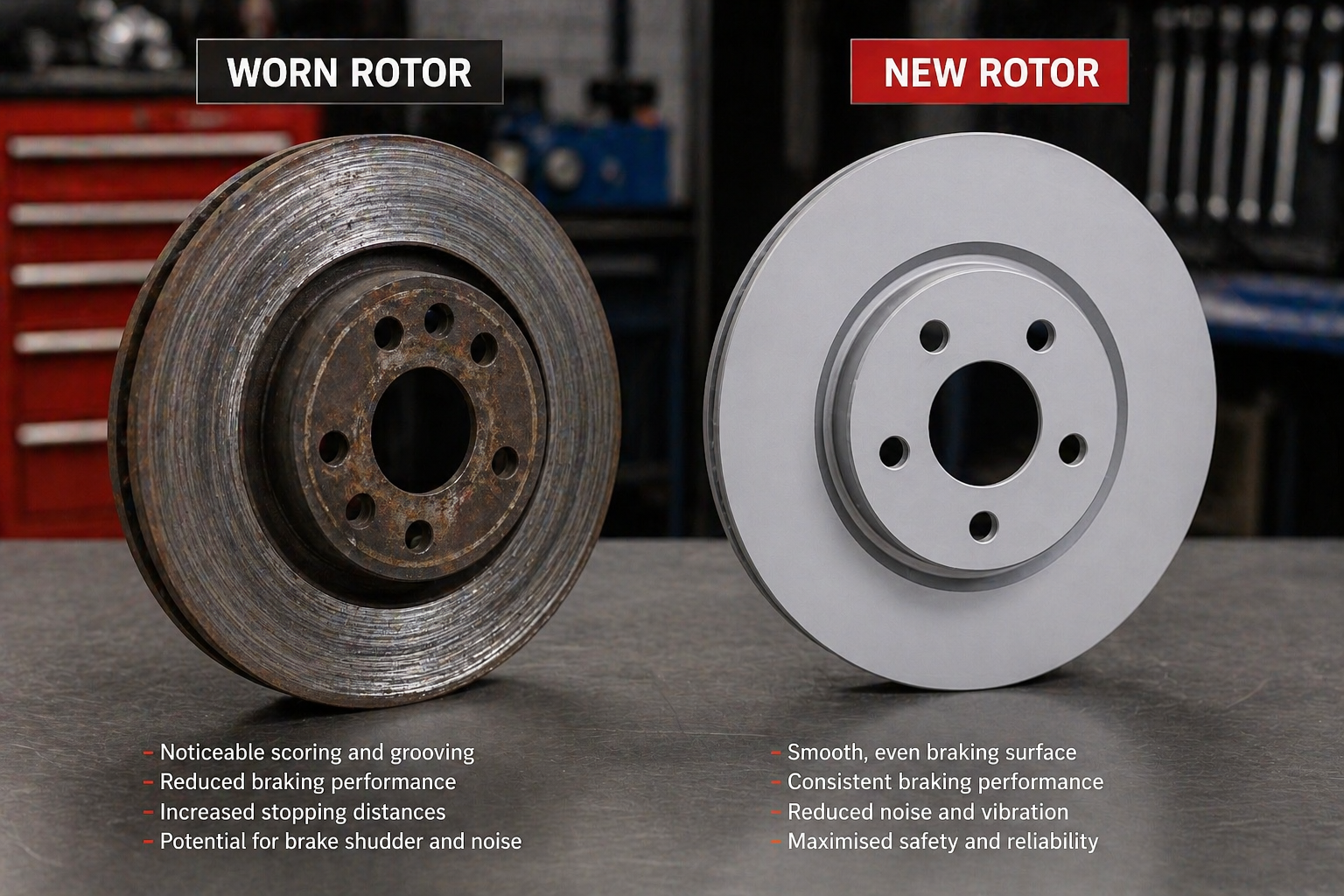
Most brake jobs start with pad replacement. Done properly, this involves more than swapping the old pads for new ones. Brake rotors that have worn unevenly need to be machined back to true within manufacturer specification, or replaced if they are below minimum thickness. Skipping this step is the single most common shortcut in cheap brake jobs, and it shows up within weeks as brake judder, uneven pad wear, and reduced stopping performance. Yes, we see those cars come back to us all the time. We use on-car brake lathes for European vehicles where rotor removal is impractical, and we replace rather than machine where the manufacturer specification calls for it.
European Ceramic Brake Systems for Quieter, Cleaner Stopping
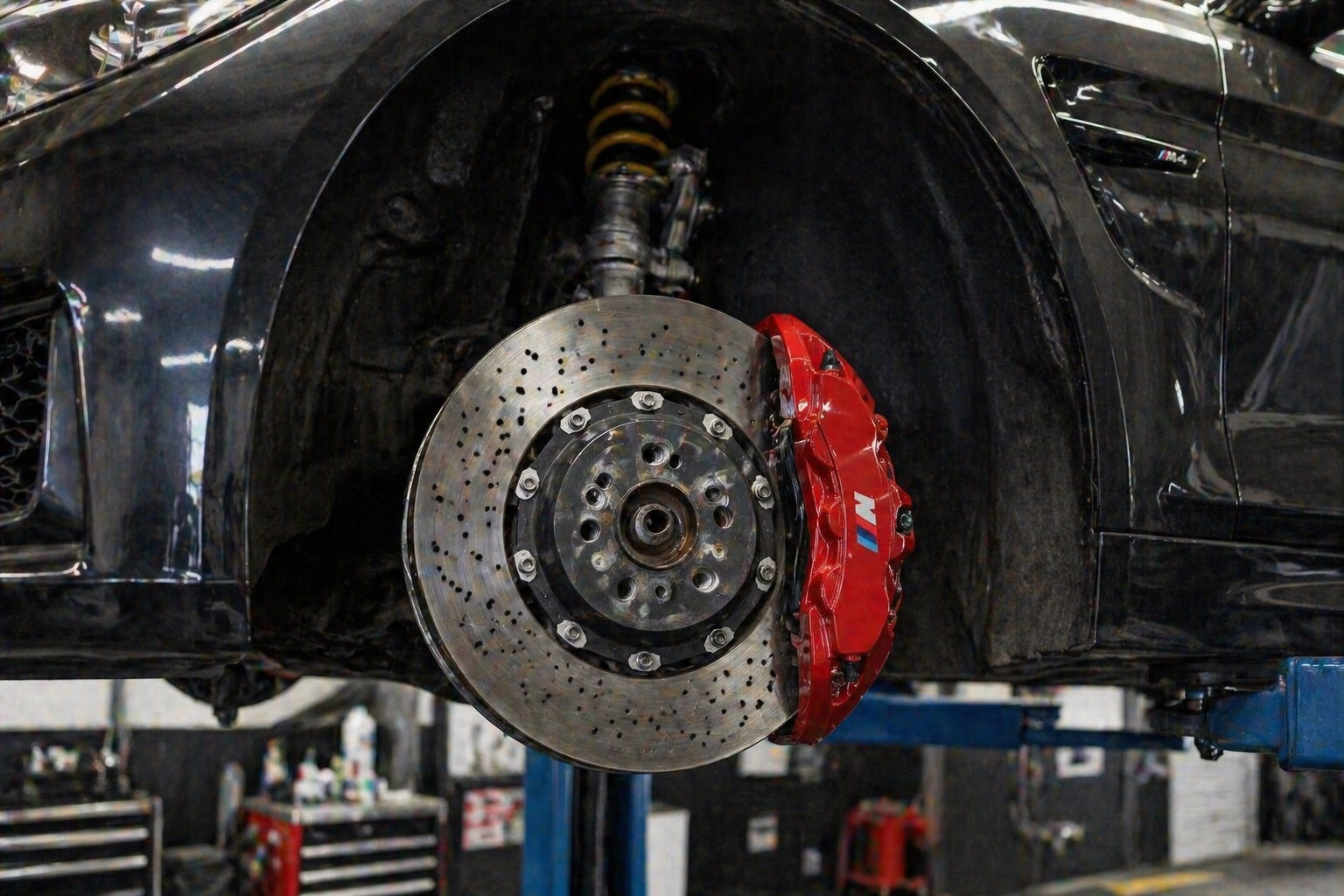
European ceramic pads are designed to handle the thermal demands of high-performance driving, the heavy weights of modern SUVs, and the specific friction characteristics European brake calipers expect. We fit OEM ceramic pads from manufacturers like Brembo, ATE, Pagid, and Akebono, all of whom supply the original equipment to BMW, Mercedes-Benz, Audi, and Range Rover from the factory. The reduction in brake dust on alloy wheels alone is enough for most owners to notice the difference, but the more important benefits are consistent pedal feel, reduced fade under hard braking, and longer rotor life.
Brake Fluid Flush and Hydraulic System Protection
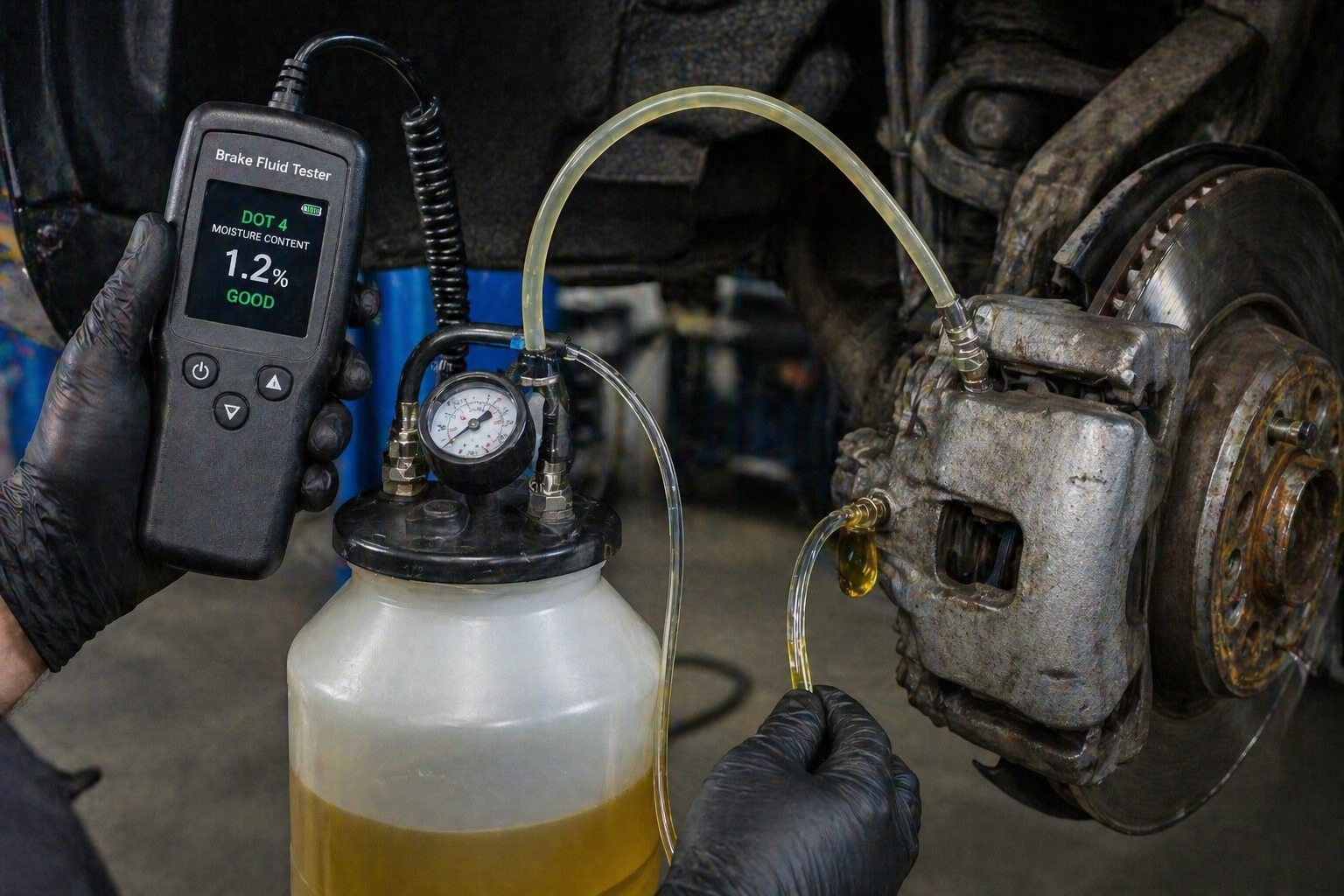
Brake fluid degrades through moisture absorption rather than visible deterioration. Most manufacturers specify a brake fluid change every two years regardless of mileage, because moisture-contaminated fluid lowers the system boiling point and can damage ABS modules, master cylinders, and brake calipers over time. We perform full hydraulic flushes using DOT 4 or DOT 5.1 fluid as specified by the manufacturer, with proper bleeding sequence to make sure no air remains in any line.
ABS Diagnostics and Electronic Brake System Repairs
When the ABS warning light appears, the cause can range from a simple wheel speed sensor fault to a failing ABS module. Diagnosing this properly needs factory-level diagnostic platforms (BMW ISTA, Mercedes-Benz XENTRY, Audi ODIS, JLR Pathfinder for premium European vehicles) along with the ability to perform bi-directional testing of the ABS pump and valves. Generic scanners can read fault codes but cannot perform the live testing required for accurate diagnosis. We have the platforms, the test equipment, and the experience to resolve electronic brake system faults rather than guessing at component replacement. For deeper context on systematic electronic fault investigation, see our auto electrical and engine diagnostics page.
Warning Signs Your Brakes Need Immediate Attention
- High-pitched squealing when braking lightly. Most European brake pads have wear sensors that produce this exact sound when pad thickness reaches minimum specification. Book a brake inspection within two weeks.
- Grinding or metallic scraping when braking. This means the pad material has worn through completely, and the metal backing plate is contacting the rotor. Stop driving the vehicle and book service immediately. Continued driving will damage rotors and potentially calipers, turning a $600 brake job into a $2,000 one. Yes, that is the honest truth.
- Vibration or pulsation through the brake pedal. Almost always means warped or unevenly worn rotors. The vehicle is still driveable but stopping distances are compromised, particularly in wet conditions or on the steep descents around the Redlands.
- Brake pedal feels soft or sinks toward the floor. Means air or moisture in the brake fluid, or potentially a failing master cylinder. This is a safety-critical fault and warrants immediate workshop attention rather than continued driving.
- Vehicle pulls to one side under braking. Suggests uneven pad wear, a stuck caliper, or brake hose collapse on one side. The vehicle is still driveable but stopping behaviour is unpredictable.
- ABS or brake warning light on the dashboard. Modern vehicles disable ABS protection when faults are detected. The brakes still work mechanically, but you have lost the electronic safety systems that prevent skidding under heavy braking. Book diagnostic investigation within the week.
- Burning smell after extended braking. Means either glazed pads, a stuck caliper, or contamination in the brake fluid. Particularly common after long descents like Mount Cotton Road. Worth investigating before the next long trip.
If you recognise any of these symptoms, our diagnostic process identifies the root cause rather than just replacing the obvious component. Book an inspection rather than continuing to drive on uncertain brakes. Thank you for taking it seriously, your safety matters.
Real Brake Repair Costs in Brisbane (What You Should Actually Expect to Pay)
Brake pricing in Brisbane varies based on vehicle type, parts grade, and whether rotor machining or replacement is needed. The table below covers realistic 2026 ranges at qualified independent specialist workshops, with OEM-equivalent or genuine parts and proper machining where required. Dealer pricing for the same work usually sits 30 to 60 percent higher.
| Service | Vehicle Type | Typical Range |
|---|---|---|
| Front pad replacement only | Japanese / Korean | $220 to $380 |
| Front pad replacement only | European | $380 to $650 |
| Front pads and rotors | Japanese / Korean | $420 to $720 |
| Front pads and rotors | European | $650 to $1,200 |
| Full four-corner brake service | Mid-range vehicle | $750 to $1,300 |
| Full four-corner brake service | Premium European | $1,300 to $2,200 |
| Brake fluid flush only | Any vehicle | $150 to $250 |
| ABS diagnostic investigation | Any vehicle | $180 to $380 |
Three things drive the pricing variation. Parts grade matters, because OEM ceramic pads cost two to three times as much as generic pads, but they last considerably longer and protect rotors better. Vehicle complexity matters, because Range Rover and Mercedes-Benz S-Class brake systems involve significantly more labour than a Toyota Corolla. Service interval matters, because rotors that need machining add labour, and rotors below minimum thickness need replacement entirely.
Brake fluid service is also a mandatory item under most manufacturer service schedules, and our standard practice is to inspect the fluid condition at every brake service so that you only pay for replacement when the fluid genuinely warrants it. Yes, that is the honest approach, and we believe in it.
Do not wait until your brakes become dangerous. Book your brake inspection and drive away with confidence.
The Difference Between a Proper Brake Job and a Cheap One
Brake work attracts more shortcut behaviour than almost any other service category in the automotive industry. The reason is straightforward. Most brake faults present similar symptoms, customers usually accept the first quote they receive when something is making concerning noises, and the difference between a proper job and a cheap one is invisible until brake performance starts deteriorating six months later.
The shortcuts most commonly taken include skipping the rotor machining step (which means new pads on warped rotors, leading to brake judder within months), using generic semi-metallic pads on vehicles designed for ceramic compounds (which means brake dust, noise, and accelerated rotor wear), reusing old brake hardware like clips and shims (which often causes squealing and uneven wear), and skipping brake fluid replacement when it is genuinely overdue (which compromises hydraulic performance over time).
A proper brake job addresses all of these items as standard practice rather than upsells. The pads we fit match the vehicle’s original equipment specification. The rotors are machined to true within tolerance, or replaced if they are below minimum thickness. The hardware is replaced where required, the calipers are inspected and lubricated where the manufacturer specifies, and the brake fluid is checked and replaced if degraded.
The Mount Cotton Road test is a good real-world reference for brake quality. Any decent pad and rotor combination handles a single descent without drama. The cheap setups fade noticeably on the second descent of the day, while the proper setups remain consistent through repeated use. Yes, Brisbane’s terrain genuinely punishes cheap brake work, which is why we recommend doing brakes properly the first time rather than discovering the limitations on a steep descent. Drivers from Chandler and Alexandra Hills families regularly tackle this descent on the daily commute, which puts genuine load on brake systems.
Why Trust SemCar for European Brake Specialist Work
European vehicles place specific demands on brake servicing that go beyond the general cautions outlined above. Three areas in particular separate genuine European specialists from workshops that happen to accept European vehicles through the door.
The first is electronic integration. Many European vehicles need coding procedures after brake work. BMW vehicles built since approximately 2010 require electric parking brake retraction through ISTA before pad replacement, with calibration after refitting. Mercedes-Benz models with sensotronic brake control or active brake systems need XENTRY access for fluid bleeding and system reset. Range Rover and Discovery models need Pathfinder access for brake wear sensor coding and electronic parking brake calibration. Without these procedures, brake jobs on European vehicles either fail to complete or create new fault codes immediately.
The second is parts specification. European brake systems use specific pad compounds, rotor metallurgy, and brake fluid grades engineered for the vehicle’s intended performance. A Range Rover Sport SVR fitted with generic pads and rotors will brake measurably worse than the same vehicle with proper Brembo or ATE specification components. Yes, the cost difference at the retail level is meaningful, but the performance difference is significant.
The third is technical depth. Every European brake system has its known weak points and characteristic fault patterns. The MK60 ABS module on certain Volkswagen Group vehicles, the SBC unit on early Mercedes-Benz E-Class models, and the ceramic pad break-in procedures across BMW M Performance vehicles all need specialist knowledge that comes from working exclusively with these vehicles over many years. Range Rover platforms add another layer because the brake system interacts directly with the air suspension, which is why we cover the broader chassis picture on our air suspension and steering page for owners chasing a complete chassis health assessment.
That is the depth our Capalaba workshop brings to every European brake job, supported by current factory diagnostic subscriptions for every major brand we service. Thank you for trusting us with the work.
Local Brake Specialists Serving Capalaba, Alexandra Hills and Chandler
Our brake repair work draws clients from across Brisbane’s eastern suburbs and the wider Redlands region. Each of the three suburbs we serve most actively brings its own brake servicing patterns based on the local vehicle population and driving conditions.
Capalaba residents have a specialist European brake workshop within their own postcode, with the diagnostic equipment, factory-grade parts relationships, and technician depth needed to handle anything from a routine pad replacement on a daily Hyundai to complex air suspension and brake interaction issues on your BMW M Sport or premium European platforms. Our 15-plus years of European specialist experience and ARCtick certification distinguishes us within the local Capalaba workshop landscape, particularly for owners of BMW, Mercedes-Benz, Audi, Volkswagen, Porsche, Land Rover, and Jaguar vehicles needing proper diagnostic capability rather than generic brake work.
Chandler clients usually arrive at SemCar after weighing up the alternative, which involves a 30 to 45 minute drive to specialist workshops or dealerships further into the city. With many Chandler households running premium European vehicles, the savings on European brake work at an independent specialist often exceed $400 per axle compared to dealer pricing, with no compromise on parts quality or technical standard.
Alexandra Hills clients often come to us through word-of-mouth recommendations, particularly for European brake work where local options are genuinely limited. The combination of transparent pricing, proper service documentation, and the convenience of a five-minute drive instead of a 45-minute round trip has built a loyal client base in this suburb specifically. Thank you to everyone who has sent a friend our way.
Brake Repair Questions Brisbane Drivers Ask Before Booking
How much does a brake pad replacement cost in Brisbane?
A front pad replacement on a Japanese or Korean vehicle usually costs between $220 and $380 at a qualified independent specialist. The same service on a European vehicle generally runs $380 to $650, reflecting the higher cost of European-specification ceramic pads and the additional labour some European brake systems need. If the rotors also need machining or replacement, expect the total to land between $420 and $1,200 depending on vehicle and parts grade. Dealer pricing for the same work usually sits 30 to 60 percent higher.
Should I replace my brake rotors or have them machined?
Both options are legitimate when applied correctly. Rotors above minimum thickness with even wear can usually be machined back to true at significantly lower cost than replacement. Rotors below minimum thickness, or showing heat cracking, deep scoring, or warping beyond what machining can correct, need replacement. We measure rotors at every brake service and recommend the correct option based on what we find rather than defaulting to whichever generates higher revenue. Yes, that is the honest position.
How often should brakes be checked or replaced?
Most manufacturers recommend a brake inspection every 10,000 to 20,000 kilometres or annually, whichever comes first. Brake pads typically need replacement every 40,000 to 80,000 kilometres depending on driving style and vehicle type. Heavier vehicles, performance variants, and stop-start urban driving accelerate wear. The actual replacement timing depends on pad thickness measured during inspection, which is why regular checks matter more than calendar-based replacement schedules.
How long do European car brake pads typically last?
Most European ceramic pads last between 50,000 and 80,000 kilometres in typical Brisbane driving conditions. Performance variants and heavier vehicles like Range Rover models tend toward the lower end of that range, while lighter vehicles driven primarily on motorways often reach the upper end. Rear pads usually last twice as long as front pads on most vehicles. Driving style affects pad life significantly, with stop-start urban traffic accelerating wear meaningfully compared to consistent motorway use.
Will using non-OEM brake pads damage my European car?
Non-OEM pads from reputable suppliers like Bosch, Pagid, or Akebono are generally fine and meet manufacturer specification. Bargain-bin generic pads from unknown suppliers can damage rotors through uneven friction characteristics, generate excessive brake dust, produce noise issues, and in some cases trigger false fault codes on vehicles with brake pad wear sensors. Our standard offering is OEM-equivalent pads from manufacturers who supply original equipment to European factories, which protects warranty compliance and matches the original vehicle specification.
What is brake fluid and why does it need changing?
Brake fluid is the hydraulic fluid that transfers force from your foot through the master cylinder to the calipers at each wheel. It is hygroscopic, meaning it absorbs moisture from the atmosphere over time even with the system sealed. Moisture-contaminated brake fluid lowers the boiling point of the system, which causes brake fade under hard use and can damage ABS modules, master cylinders, and calipers over time. Most manufacturers specify replacement every two years regardless of mileage.
Can you service brakes on my BMW or Range Rover under warranty?
Yes. Under Australian Consumer Law, your manufacturer warranty stays fully protected when an independent specialist performs servicing using parts and procedures that meet manufacturer specification. We use OEM-equivalent or genuine parts, follow factory service procedures, perform any required electronic coding through proper diagnostic platforms, and document the work to dealer standard. Brake servicing at SemCar does not void your manufacturer warranty.
How long does a typical brake service take?
A front pad replacement with rotor machining usually takes 90 minutes to two hours. A full four-corner brake service including pads, rotors, and brake fluid flush usually takes three to four hours. Diagnostic investigations on ABS or electronic brake faults can extend longer depending on complexity. Same-day service is available for most brake jobs when parts are in stock at our Capalaba workshop. We offer a free courtesy car with every booking, reserved at the time you book, so you are not left without transport during the service period. Thank you, that is something we believe matters.
What is the difference between ceramic and semi-metallic brake pads?
Ceramic pads use ceramic fibre compounds with copper or other low-friction additives, producing less brake dust, quieter operation, and better high-temperature performance. Semi-metallic pads use steel wool, copper, iron, and other metallic fibres bound in resin, producing stronger initial bite at the cost of more brake dust and noise. Most European vehicles are factory-fitted with ceramic pads because the engineering favours their characteristics. Most Japanese and American vehicles use semi-metallic pads as standard. Switching between compounds is possible but changes the brake feel noticeably.
How to Choose the Right Brake Specialist in Brisbane
The right brake workshop combines proper diagnostic capability, transparent pricing, OEM-quality parts, and technicians who understand the specific demands of your vehicle’s brake system. These qualities apply equally whether you drive a Toyota Camry, a Volkswagen Golf, a Range Rover, or a BMW M5. The vehicle changes, but the standard of a proper brake job does not.
Yes, Brisbane drivers have a real choice between dealerships, general workshops, and specialist independents. Dealerships offer factory training and direct manufacturer relationships at premium pricing. General workshops offer convenience at lower cost but often lack the specialist tools European vehicles need. Specialist independents like us deliver the technical standard of a dealer at meaningfully lower cost, with the same factory diagnostic access and OEM parts where they matter.
Book Your Brake Repair with Brisbane’s European Specialists
If your brakes are squealing, grinding, pulling, vibrating, or simply due for their next service, we are ready to help. Our Capalaba workshop serves drivers across Alexandra Hills, Chandler, Redland Bay, and greater Brisbane, with factory-grade diagnostic equipment, OEM-quality parts, and technicians who understand European brake systems at the depth these vehicles deserve.
Call our team on (07) 3823 5844 or 0426 935 622 to book your brake service or diagnostic assessment. You can also visit us at Unit 2, 128 Steel Street, Capalaba QLD 4157. Whether your vehicle needs a routine pad replacement, a full system overhaul, an ABS investigation, or a quick safety check before a long trip, yes, we can help. We will give you a clear inspection, an honest quote, and the quality of workmanship your brakes deserve.
Thank you. SemCar Automotive Group. Brisbane’s trusted European brake specialists.